
The Kindest Word You Can Learn Is "No" - Kindness Series #4
Why healthy boundaries are one of the most compassionate things you can practice
Have you ever agreed to do something you didn't really want to do?
You didn’t say Yes because you had the time. You didn’t say YES because you had the energy.
➡️ You said YES because saying NO felt uncomfortable.
You helped. You stayed late. You took on the extra responsibility. You rearranged your plans.
And afterwards? à You felt exhausted. Maybe even a little resentful.
Yet if someone had asked whether you were simply trying to be kind, the answer would probably have been yes.
Many of us learn from an early age that kindness means being helpful, accommodating, and available. We want to support the people we care about. We want to be generous. We want to make life easier for others.
Those are beautiful qualities. And sometimes they come at a cost.
When Kindness Starts Draining You
There is a difference between giving from abundance and giving from depletion. One feels energizing. The other feels exhausting.
Most people don't suddenly wake up burned out because of one big decision. More often, exhaustion is built through hundreds of small moments where we ignore our own needs.
We say yes when we mean no.
We push through when we need rest.
We take responsibility for things that were never ours to carry.
And because we're capable, reliable, and caring, people often come to expect it.
The problem isn't kindness.
The problem is when kindness no longer includes us.
The Hidden Cost of Always Being Available
I once worked with someone who was known as the person who could always be counted on.
Need help with a project? à Ask her.
Need someone to step in at the last minute? à Ask her.
Need emotional support? à Ask her.
She was generous, thoughtful, and deeply caring.
But she was also EXHAUSTED.
What finally surprised her wasn't how much she was giving. It was how rarely she stopped to ask herself a simple question:
"Do I actually have the capacity for this right now?"
For years, she had measured kindness by how much she gave to others. She had never considered that kindness might also require protecting her own energy.
I suspect many of us can relate.
Why Saying No Feels So Difficult
For many people, saying no isn't difficult because they don't know how. It's difficult because of what they think it means.
We worry that people will be disappointed.
We worry that we'll seem selfish.
We worry that we'll let someone down.
And if you're someone who values connection and harmony, those feelings can be uncomfortable.
So instead of disappointing someone else, we disappoint ourselves.
Repeatedly.
Until exhaustion starts making decisions for us. The irony is that a reluctant YES often creates more problems than an honest NO.
A yes filled with resentment doesn't feel good for anyone involved.
Kindness Without Boundaries Isn't Kindness
This may be one of the most important lessons I've learned. Boundaries are not walls. They are not punishments. And they are not signs that you care less.
Healthy boundaries simply help us stay connected to what matters.
They allow us to give without constantly depleting ourselves. They help us remain present instead of overwhelmed. They create the conditions for genuine generosity.
Because when every request becomes an obligation, kindness slowly turns into duty. And duty has a way of draining the joy out of even the things we care about most.

What a Healthy NO Sounds Like
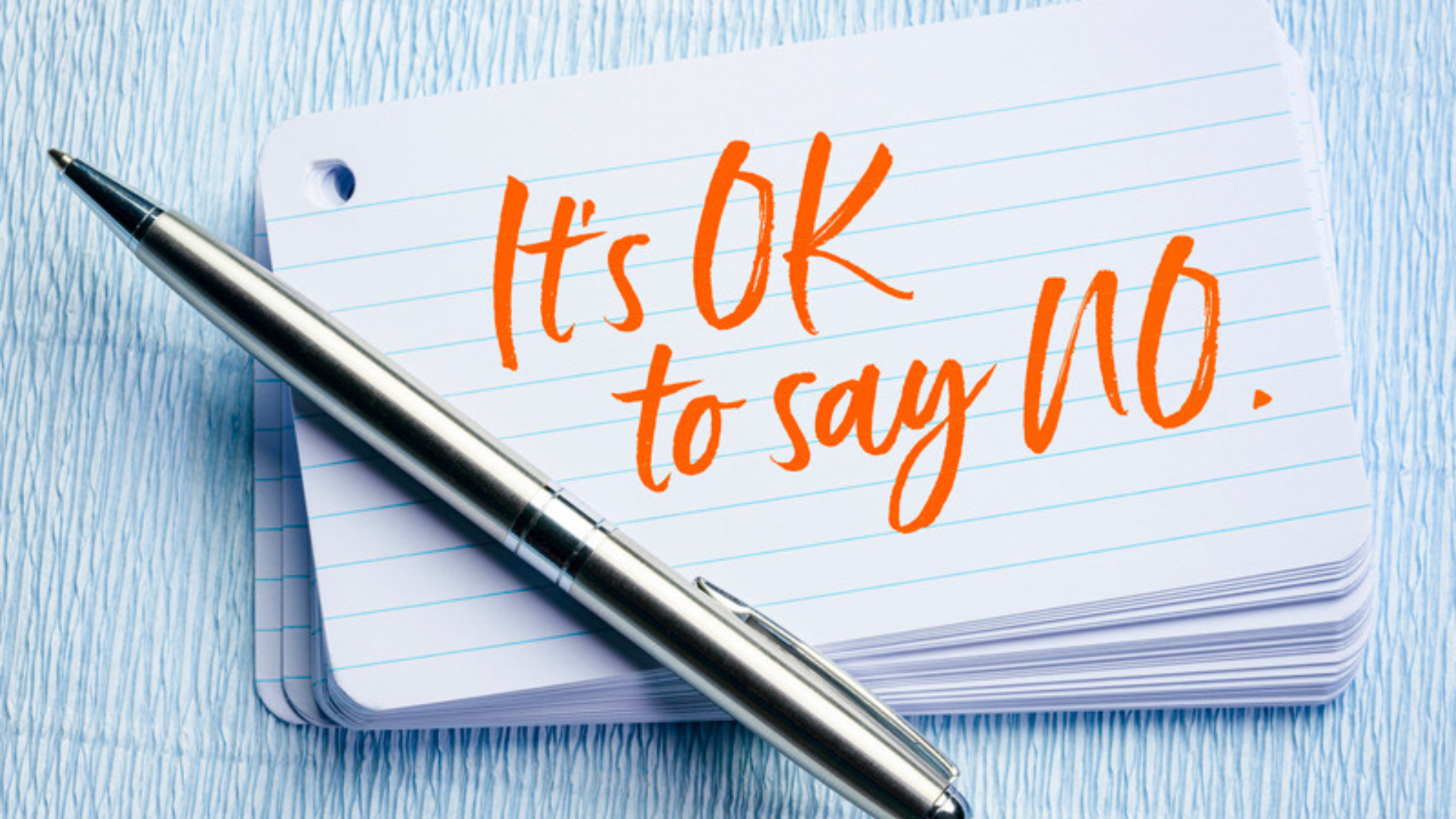
Many people imagine boundaries have to be dramatic. They don't. A healthy NO can sound surprisingly simple.
"I can't commit to that right now."
"I need some time to think about it."
"I'm not available this week."
"That doesn't work for me."
No lengthy explanation. No elaborate excuse. No guilt-filled apology tour.
Just honesty. Just clarity. Just respect—for the other person and for yourself.
A Different Way to Think About Kindness
What if kindness isn't measured by how much you sacrifice?
What if it's measured by how consciously you choose?
Sometimes kindness looks like listening. Sometimes kindness looks like leaving.
Sometimes kindness looks like saying yes. And sometimes kindness sounds like a simple, respectful no.
The common thread is awareness.
Not obligation. Not guilt. Not fear.
Awareness.

Now, here's your chance to practice:
Over the next week, notice how often you automatically say YES.
Become aware of the reason behind your YES: is it because you genuinely want to do it and you have the capacity and energy to do it?
Or is it because saying NO feels uncomfortable and the YES comes automatically?
Give yourself the favor of PAUSING before responding:
Take a breath. Or two. 😉
Ask yourself: "If I say YES to this, what am I saying NO to?"
Your time? Your energy? Your rest? Your priorities?
There is no right answer.
The goal isn't to become less caring. The goal is to become more conscious.
Because every healthy boundary is ultimately an act of self-respect.
And self-respect makes kindness sustainable.
Key Takeaways
Kindness and boundaries are not opposites.
Constantly saying YES can lead to exhaustion and resentment.
A healthy NO protects your energy and your well-being.
Boundaries allow kindness to remain genuine rather than becoming an obligation.
The goal is not to give less—it is to give more consciously.
Stay Tuned for More Kindness
So far, we've explored awareness, inner strength, emotional reactions, and healthy boundaries - find the articles here in this blog.
In our next article, we'll zoom out and look at kindness from a broader perspective:
Why choosing compassion in a cynical world may be one of the quietest forms of courage.
We'll explore what it means to stay connected to your values—even when the world encourages you not to - article #5: It Takes Courage To Really Care
Subscribe to the newsletter and continue the Kindness Month journey with us.